Honoring the sun is something I often talk about, mostly because in recent years, from my experience, I’ve noticed more and more people hyper focusing on the magic of the moon to the point of rejecting the glory of the Sun. From observation, this seems to stem from how the concept of Masculine and Feminine energy is perceived collectively in todays world.
I’m a huge believer in balance, and that leaning to either extreme hurts the natural order of things. The way I see it is, without the sun and moon we would not be able to sustain life on Earth. Both celestial entities are important to life, and without the sun we would not even be able to see the beauty of the moon. To me, this make the art of balance; meeting harmoniously in the middle and allowing room to ebb and flow with the motions so very important. This is also my point of view, so take with that what you will.
The observance of the longest day of the year, and the veneration of the Sun is a concept we have seen since the beginning of recorded history. Many ancient and modern people have built festivals on this day to honor the light before it slowly rescinds for the next half of the year.
Some of these celebrations include:
- Kronia– A festival in Athens that everyone from slaves, to servants, to the rich and poor all dined together as equals in celebration of the God Cronus, the father of Gods. Interestingly enough while Kronus is celebrated by the Greeks in the Summer, his Roman equivalent, Saturn, would subsequently be revered in the Winter by the Romans.
- Vestalia – A Roman festival in which the Vestal Temple that was normally closed to the public would open it’s doors to all women so that they could give offerings in honor of the Goddess Vesta. Vesta was thought to be a Goddess that protected virginity, and it was a great honor for young women to be chosen as one of the Vestal Virgins who would guard the temple flame and pledge a 30 year vow of virginity to Vesta.
- Midsummer/Litha- A European agrarian festival that celebrated the season of fertility and growth. Traditions include dancing around a maypole, building a communal fire such as a bonfire, eating lots of food, and drinking to your hearts content. This festival is seen to be shared in some form or another between the Slavic, Nordic/Scandinavian, and Celtic peoples with the ancient Gaulish taking this time to honor the Goddess Epona.
All cultures around the world observe the longest day in their own ways, the ancient Chinese (from the best of my knowledge) considered this a time of Yin for it’s feminine energy, whereas the Winter Solstice was revered as Yang for it’s masculinity.
Ancient Egyptians looked for the star Sirius during this time, which marked a phenomenon where they experienced the overflowing of the Nile. This event was looked forward to as it would nourish the ground with well deserved water for cultivating crops.
In ancient Mesopotamia they saw quite the opposite, and this is where perception matters, because not everyone, ancient and modern, views things like this in the same way. They saw this time of year as the dying season as it was during this time where they would experience disease and famine.. It was believed that their agricultural God, Tammuz, must die during the summer and they would mourn by holding a funeral for him.
Indigenous American cultures have their own versions of solar celebrations; the Penobscots tell a tale of how their legendary hero Gluskap found summer. He did this by traveling on the back of a whale to the land of Summer and bringing her north to strike a deal with Great Winter who a terrible Giant that froze the land and made it difficult for the people to thrive. In this tale Summer and Winter both agreed to rule each half of the year as a compromise.
Of course these are merely summaries of the festivals, and stories behind them, there’s so much more to read about and explore about each individual celebration, and I strongly encourage others to take what they learn here and branch out on their own research.
The common theme, I’ve noticed, among these varying cultures, aside from the sun and it being the longest day of the year, is that in some form or another it is centered around sustenance and agriculture. Fertility meaning reproduction of crops to feed the civilians of the cities and towns they come from.
Celebrating in the modern world
There are a plethora of spiritual paths out there, many of which align with these types of celebrations. From Neo-Paganism to reconstructionist movements, all the way to the surviving groups of people who were able to hold onto their ancient customs; there’s a lot to be said about the celebrations that continue on today.
In the modern world celebrating the sun, the longest day, and all that it means and symbolizes does look very different from the ancient world, although we can draw inspirations from these ancestors and bring forth deeper connections to how we honor the changing of seasons today, which can be seen in things like the tale of the Holly King and Oak King.
Holly King and Oak King:
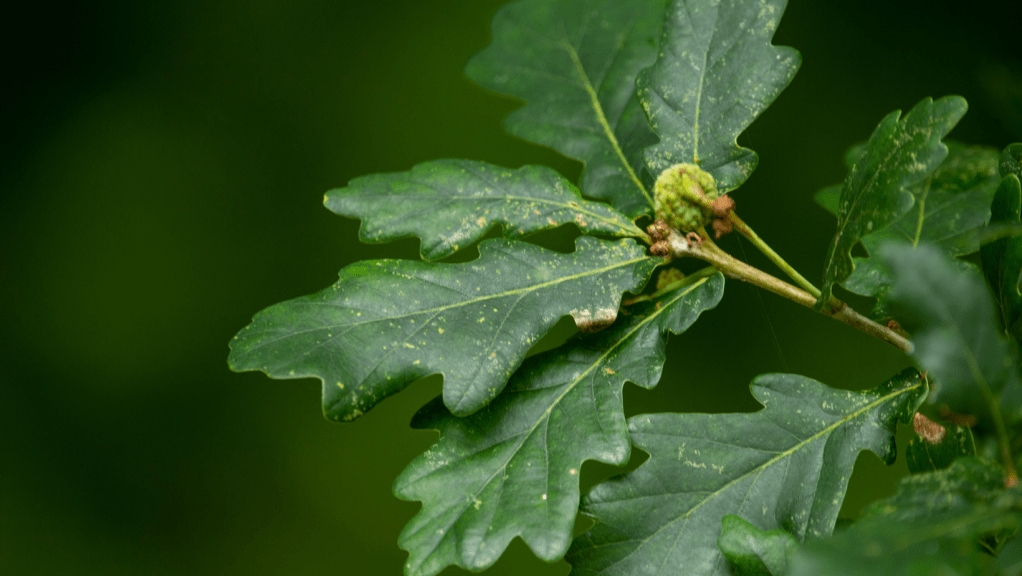
The tale of this battle of the two kings is one that is often recited during the solstices. This story is well put together that many assume it’s older than it is, but it’s first emergence of the story as we know it, takes place in the 1890 publication of the Golden Bough, where Sir James George Frazer took inspiration from varying cultures including: Scandinavian, Bavarian and even Native American to support the story. Which seems evident when you see the striking similarity between this battle of the tree spirits and the negotiations between Summer and Winter from the aforementioned tale of how Gluskap found summer.
As far as how the tale is told today, seems to go back to the 1948 Robert Graves publication The White Goddess, making it very much a neo-pagan tradition rather than an ancient one.
The Reign of the Oak King
Two Kings meet in the grove,
One crowned with Holly
The other crowned in Oak.
They both raise their axes;
A battle they cry
Blow by blow,
strike by strike,
and sigh by sigh.
Who will it be?
The last one standing…
This time around?
It’s the bloodied king
With the Oaken crown.
He grabs the sun,
And slowly declines.
Until they meet again
In six months time.
Symbols of the Season
Elements: Fire, Water and Earth
Colors: Red, white, yellow, green and blue
Stones: Sunstone, Tigers eye, Lapis Lazuli, Pearl, Ruby
Animals: Bears, Horses, Summer birds, Crustaceans
Mythical Animals: Satyrs, Faeries, and Thunderbirds
Plants: Oak Trees, Daisies, Dandelions, Honeysuckle, Sunflowers
Zodiac Signs of the Summer: Cancer, Leo, Virgo
Things to do for the Solstice:
There’s so many activities for all people to enjoy. You can be a solitary practitioner, a family unit, or a group of people gathering together to celebrate the rhythms of nature. Here are a few things you can do:
- In the winter many make annual resolutions for what they’d like to see in the next year. With the summer solstice the energy isn’t much different. So get out your pens and journals and make a list of your goals for the year ahead.
Pro-Tip: Make your resolutions at the new year according to your path. Usually around the the solstices or equinoxes, and at each season change do a check in with yourself to see where you’re at with achieving your goals. - Go outside. However this means for you. Have a bbq, throw out a blanket and have a family meal in a park, at the beach. Go for a hike. Get outside and connect with nature. You’ll be happier that you did.
- Build a fire. If you have the means, hosting a bonfire would be fantastic, but not everyone has this available to them. Instead work with what you have. Own a fire pit? Build a fire inside and enjoy the flames. Don’t even have that? Light a candle and do you’re own fire ritual with the solitary flame. Pro-Tip: Write a petition for what you want to come out of this season, year, etc. from what you want to bring in, to what you want to release, and burn it in the flames. The message will be carried out to who you need it to go to.
- Make suncatchers. This is a beautiful way to invite the sun into your home.
- Make flower crowns and rejoice in your own majestic prowess.
- Make crafts that involve the sun like building a sundial, tracing your shadows with chalk, make sun prints a craft that involves using the sun’s rays and chemically-treated paper to create a silhouette of an object.
- Make sun food like Sun Tea or Sun Bread.
- Read sun books, or tell folktales about the sun.
Resources to download and use:
Sun Bread book seed from Blossom and Root
Midsummer Festival Guide from Hearth Magic
Summer Solstice Learning Resource from Gabitat Emporium
Children’s book resources:
 neasenest.com
Leave a comment